A New Car Buying Checklist for a Smarter, Stress-Free Purchase
January 22 2026 - dave@phatoon.com
Buying a new car should be a milestone moment, not an overwhelming ordeal. Think of this guide as your complete new car buying checklist, crafted to transform what can be a stressful process into a confident, clear-headed journey. It's your personal roadmap, taking you from couch research all the way to driving off the lot with a fantastic deal.
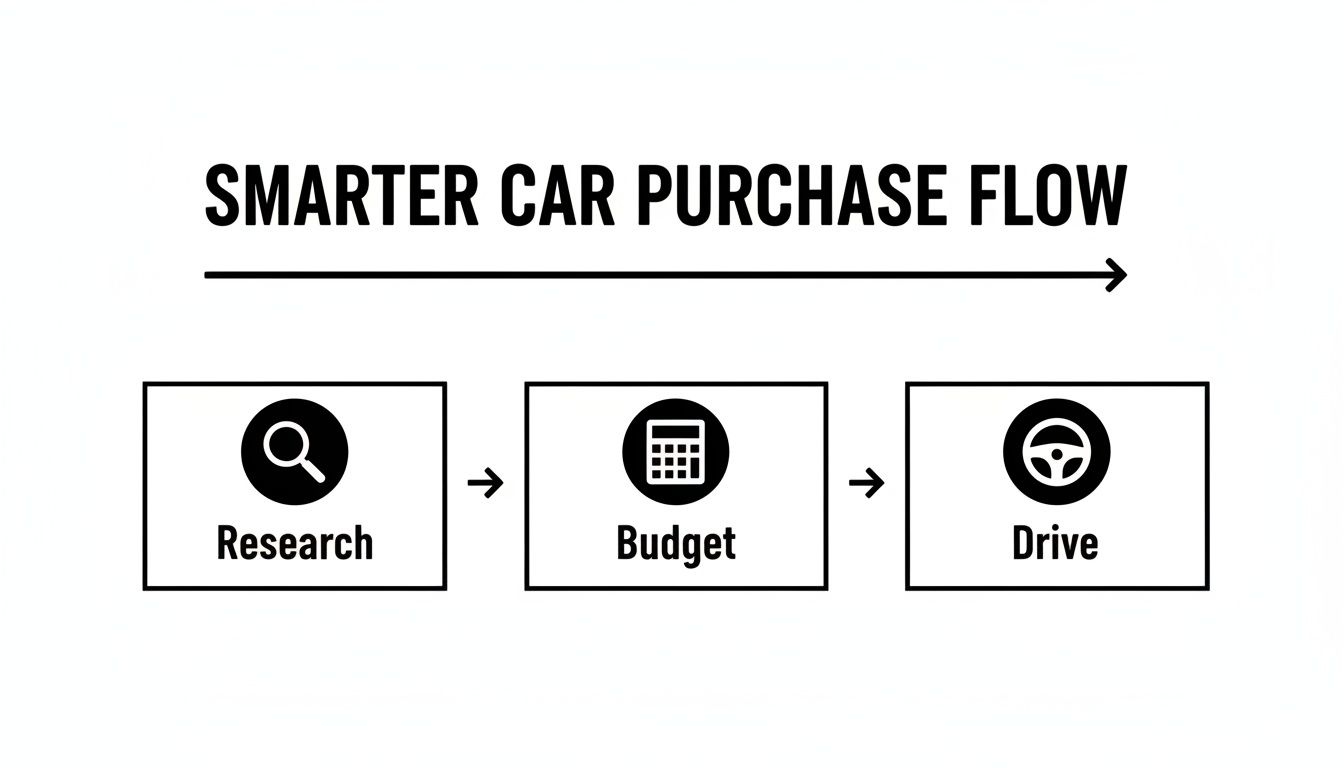 This straightforward three-phase approach makes sure you've covered all your bases long before you start talking numbers with a dealership.
 Before you get swept away by sleek designs and horsepower figures, take a minute to draw a clear line between what you truly need and what you simply want. This single exercise can save you thousands and prevent that sinking feeling of buyer's remorse months down the road.
Once you've filled this out, you'll have a much clearer picture of what vehicles actually fit your life, not just your imagination.
 The goal is to do more than just a quick spin around the block. You need to simulate your actual daily life behind the wheel. If the car doesn't feel right on the roads you drive every day, it’s simply not the right car for you.
Taking a few moments to jot down notes right after your drive will help you compare different models more objectively later on.
 Before you put pen to paper, just take a deep breath. Methodically review every single document, especially the buyer's order. This is the big one, it should clearly list the agreed-upon price of the vehicle, the value for your trade-in, and a breakdown of all taxes and fees.
Completing your new car buying checklist puts you in the driver's seat, empowering you to make a confident and rewarding purchase. When you're ready to find the perfect BMW, the team at Habberstad BMW of Bay Shore is here to provide a transparent, customer-focused process from start to finish. Explore our inventory and start your journey at https://www.habberstadbmwofbayshore.com.
Your Guide to a Smarter Car Purchase
Feeling in control when buying a car all comes down to one thing: preparation. When you have a solid plan, you can navigate around the common traps and make decisions that truly fit your life and your budget. This isn't just about finding a car; it's about finding the right car on the best possible terms. Our goal here is to break down this major decision into small, manageable tasks. As you tick off each step, you'll build the knowledge and confidence that puts you firmly in the driver's seat during any negotiation. This simple visual flow captures the core of a smart purchase: doing your homework, setting a realistic budget, and getting a real feel for the car behind the wheel.
This straightforward three-phase approach makes sure you've covered all your bases long before you start talking numbers with a dealership.
We believe an empowered customer is a happy customer. At Habberstad BMW of Bay Shore, our commitment is to provide a transparent and supportive experience, and we see this guide as the first step in that partnership.Following this checklist will help you stay focused, organized, and ultimately, drive home in a vehicle you'll love for years, without a hint of buyer's remorse.
Laying the Groundwork with Pre-Shopping Research
The smartest car-buying decisions are made long before you ever set foot in a dealership. Seriously. This is the homework phase, and it’s what separates a confident, prepared buyer from someone who gets overwhelmed on the showroom floor. It all starts with an honest look at your real life.
Before you get swept away by sleek designs and horsepower figures, take a minute to draw a clear line between what you truly need and what you simply want. This single exercise can save you thousands and prevent that sinking feeling of buyer's remorse months down the road.
Define Your Needs Versus Your Wants
Think about your non-negotiables first. If you've got a growing family and a trunk full of sports gear every weekend, ample cargo space is a need. Heated seats for those chilly Long Island winters? They feel essential, but they’re technically a want. Be brutally honest about your daily commute, how many people you actually drive around, and your typical weekend activities. This quick exercise can help crystallize your priorities.Needs vs Wants Analysis
This simple checklist can help you define what's essential and what's a bonus in your next vehicle.| Feature Category | Must-Have (Need) | Nice-to-Have (Want) |
|---|---|---|
| Seating & Cargo | Example: Seats for 5, fits 2 car seats | Example: Third-row seating for occasional use |
| Performance | Example: Good fuel economy for commute | Example: V6 engine for more power |
| Drivetrain | Example: All-wheel drive for snow | Example: Off-road driving modes |
| Safety | Example: Automatic emergency braking | Example: 360-degree camera system |
| Comfort | Example: Reliable A/C and heat | Example: Ventilated leather seats, panoramic sunroof |
Research Models and Total Ownership Costs
With a few potential models in mind, it's time to dig in. Go beyond the glossy manufacturer websites and find reviews from trusted, unbiased automotive journalists. Real-world owner feedback on forums or review sites can give you insights you'll never find in a brochure, things like annoying quirks or unexpected repair costs. And remember, the sticker price is just the cover charge. The total cost of ownership is the real number that impacts your wallet. You absolutely have to account for:- Average insurance premiums for that specific model.
- Estimated annual fuel costs based on your driving.
- Typical maintenance and repair expenses.
- Depreciation, how much value the car bleeds over time.
The goal is to move beyond the emotional pull of a car and focus on its practical function in your life. A vehicle that looks fantastic but doesn't fit your daily routine will quickly become a source of frustration.
Understand Market Timing and Trends
Believe it or not, when you buy can make a big difference. Dealerships have sales goals to meet monthly, quarterly, and especially at the end of the year. Hitting these targets can unlock bonuses, making sales teams more flexible and creating opportunities for a better deal. Watching broader market trends also gives you valuable context. For example, global light-vehicle sales recently hit 91.7 million units, finally climbing back past pre-pandemic levels. However, the U.S. market showed more complexity, with December sales dipping a bit due to affordability pressures. This kind of volatility is exactly why smart buyers look for seasonal incentives as dealers work to clear out inventory and meet quotas. It's also worth noting how dominant SUVs have become, now making up 59.10% of recent new vehicle purchases, leaving traditional cars far behind. You can explore more about these global automotive sales data and trends to inform your timing. This kind of research ensures you walk into the showroom with a firm grasp of what your chosen vehicle should cost, giving you a powerful, fact-based advantage.Mastering Your Budget and Financing
Alright, let's talk numbers. This is where a little bit of homework before you shop can save you a massive headache and a lot of money down the road. Building a realistic budget isn't just about figuring out what monthly payment you can stomach. It’s about truly understanding the total cost of ownership for that beautiful new car you're picturing in your driveway. Before you set foot on the lot and fall in love with a specific model, you need to get a handle on all the related costs. We have to look past the sticker price and think about the long game. The real monthly cost is a bundle of your car payment, insurance, fuel, and even future maintenance.Building Your Total Cost of Ownership Budget
A complete budget is your best defense against nasty financial surprises. It’s far too easy to get fixated on a low monthly payment, only to find that the other expenses stretch your finances dangerously thin. To get the full picture, you have to factor in these key items:- Monthly Car Payment: An online calculator is a great starting point, but remember, it’s just one piece of the puzzle.
- Car Insurance: Get actual quotes for the specific models you're eyeing. You’ll quickly find that a sporty coupe costs a whole lot more to insure than a family-friendly SUV.
- Fuel Costs: Estimate your typical monthly mileage and check the car’s MPG rating. This will give you a solid projection for your gas budget.
- Maintenance and Repairs: Even with a new car, it's smart to tuck away a little bit each month for routine things like oil changes or eventual repairs. Think of it as a small car emergency fund.
The Power of Pre-Approval
Here’s a pro tip that completely flips the script in your favor: get pre-approved for a loan before you ever start talking to a salesperson. When you walk into a dealership with financing already secured from your own bank or credit union, you instantly become a cash buyer in their eyes. Taking this one step removes all the confusion of juggling monthly payments, interest rates, and loan terms during the negotiation. It lets you focus on one thing and one thing only: the price of the car. This puts you in a much stronger negotiating position and keeps you anchored to your budget.Your credit score is the first thing you need to know. It has a direct impact on your Annual Percentage Rate (APR). The better your score, the lower your interest rate, which can literally save you thousands of dollars over the life of the loan.Getting the financing right is a critical part of any new car buying checklist because the loan details ultimately determine what the vehicle really costs. While recent U.S. new vehicle sales climbed to 16.39 million units, higher interest rates have definitely made buyers more cautious. For families here on Long Island, manufacturer-backed financing like BMW Financial Services can be a great option, often offering very competitive APR on certain models. We've recently seen buyers with strong credit lock in rates below 4% during special incentive periods, which just goes to show why checking your credit first is so vital. Make sure your checklist includes a line item to verify the total loan cost, because small, overlooked fees can add up fast. You can dig into the details on these recent U.S. automotive sales figures by reviewing the latest industry data. Partnering with a team that provides transparent, straightforward financing is the key to buying with confidence.
The Hands-On Test Drive and Inspection
All the research and budgeting has led you here. This is the moment you move from spreadsheets and reviews into reality, getting a genuine feel for how a vehicle performs and making sure it’s in perfect condition. Don’t rush this part. A thorough test drive and a sharp-eyed inspection can either confirm you’ve found the perfect car or reveal a deal-breaker you would’ve missed on paper.
The goal is to do more than just a quick spin around the block. You need to simulate your actual daily life behind the wheel. If the car doesn't feel right on the roads you drive every day, it’s simply not the right car for you.
Making the Most of Your Test Drive
To truly evaluate a vehicle, you have to put it through its paces in environments you know well. A good dealership will encourage this, so don't be shy about asking to drive a specific route. Here are a few things to lock in on during the drive:- Drive Your Daily Route: Insist on driving on the roads you use for your commute or weekend errands. This means hitting highways, dealing with stop-and-go city streets, and even cruising through your own neighborhood.
- Test Performance: Safely feel out the acceleration when merging onto a highway. See how the brakes respond during both gradual stops and more sudden ones. Pay close attention to how the car handles corners and changes lanes. Is it responsive? Is it comfortable?
- Check Visibility: Take careful note of any blind spots. Adjust your mirrors and see how well you can actually see around the vehicle. Is the rear window view clear? How thick are the A-pillars?
- Engage with the Technology: This is your chance to play with everything. Connect your phone to the Bluetooth. Punch an address into the navigation system. See how intuitive the infotainment screen, like BMW's iDrive system, is to operate. If it’s frustrating now, it will be a constant source of annoyance later.
A car can look perfect on a spec sheet, but the real test is how it feels to you. Comfort, visibility, and the user-friendliness of the controls are deeply personal and can only be assessed from the driver's seat.Below is a helpful checklist to guide you through a more structured evaluation. It ensures you don't forget the little things that make a big difference in daily ownership.
Comprehensive Test Drive Checklist
| Area of Focus | What to Check | Notes/Rating |
|---|---|---|
| Comfort & Ergonomics | Seat adjustments, steering wheel position, pedal placement, armrest height. | |
| Engine & Transmission | Smoothness of acceleration, responsiveness, gear shift quality (auto/manual). | |
| Braking | Pedal feel (not too soft/hard), stopping power, smoothness. | |
| Steering & Handling | Responsiveness on turns, highway stability, ease of parking. | |
| Ride Quality | How it handles bumps, potholes, and rough pavement. | |
| Noise Levels | Wind noise, road noise, engine noise at different speeds. | |
| Visibility | Blind spots, mirror coverage, front/rear view. | |
| Controls & Tech | Ease of using infotainment, climate controls, indicator stalks. | |
| Practicality | Getting in and out, trunk space access, child seat installation (if needed). |
The Pre-Purchase Walk-Around Inspection
Even on a brand-new car straight from the factory, a quick but thorough visual inspection is a smart move. These vehicles travel a long way from the assembly line to the dealership lot, and minor cosmetic issues can occasionally happen during shipping and handling. Before you even get in for the test drive, take a few minutes to do a detailed walk-around. Look for anything that seems out of place, no matter how small. Here’s a simple checklist for your inspection:- Examine the Paint: Look at the car in good light from several angles. Check for any small scratches, dings, or inconsistencies in the paint finish.
- Check Panel Gaps: The spaces between body panels (like between the door and the fender) should be even and consistent all the way around the car.
- Inspect Glass and Lights: Make sure there are no chips or cracks in the windshield, windows, or light housings.
- Look at the Tires: Confirm all four tires are the same brand and model, and check for any visible damage to the wheels.
Navigating the Negotiation and Finalizing Your Deal
For a lot of people, this is where the palms start to sweat. It's the part of the new car buying checklist that feels the most like a confrontation, but it really doesn't have to be. The good news? When you approach it as a calm, straightforward business conversation, which it is, you can finalize a deal that feels fair for everyone involved. The real key to a smooth negotiation is keeping it simple. Focus on one number at a time. This simple trick prevents the conversation from getting bogged down in confusing math that can easily obscure the real cost of your new BMW. By isolating each part of the deal, you stay in control and maintain total clarity.First Things First: Negotiate the Car's Price
Before you even whisper the words "trade-in" or ask about financing, your one and only focus should be on the purchase price of the new car. You’ve already done your homework in the earlier steps, so you have a solid idea of what a fair market price looks like. Your initial offer should be grounded in that data. This is a professional discussion, not a personal one, so state your offer with confidence. Be ready to briefly explain the research that led you to that number. The goal here is simply to land on a mutually agreeable price for the car itself. That creates a solid, transparent foundation before you start adding in any other variables."Had a very positive experience with Uday from Sales. The whole process was seamless and without any pressure. Would highly recommend this dealership." - Google Review from a satisfied customer.Finding a transparent, low-pressure environment, like the one our customers experience here at Habberstad BMW of Bay Shore, makes this step much more comfortable.
Next, Discuss Your Trade-In Separately
Once you and our salesperson have shaken hands on a firm price for your new car, then it’s time to bring your trade-in into the conversation. Treating these as two completely separate transactions is crucial. It’s the best way to prevent the dealership from simply moving numbers around, making it look like they’re giving you more for your trade while just adding that cost back into the new car's price. You should already have a good sense of your current car's value from your own research. Present that value as your starting point for the trade-in negotiation. If the dealership’s offer comes in significantly lower, you can share the quotes you received from other places like CarMax or online buyers.Handling Add-ons and Extended Warranties
After you've settled the new car price and the trade-in value, you'll head to the finance office. This is where you'll be presented with optional add-ons and protection plans. These can include:- Extended Warranties: These can offer real peace of mind, especially if you plan on keeping your BMW long after the manufacturer's warranty expires.
- GAP Insurance: Guaranteed Asset Protection can be a smart move if you're making a smaller down payment. It covers the "gap" between what you owe on the loan and what the car is actually worth if it's totaled in an accident.
- Paint and Fabric Protection: Think about where you live and how you'll use the vehicle. For Long Island drivers dealing with salt in the winter and sun in the summer, these can sometimes be a worthwhile investment.
The Final Paperwork and Delivery Checklist
You've done the hard work. You navigated the research, aced the test drive, and landed on a price you feel good about. But don't pop the champagne just yet. This final stage is all about the details, and getting them right is a crucial part of your new car buying checklist. It’s easy to let the excitement take over and rush through the paperwork, but this is where you lock in your great deal and make absolutely sure the car you drive home is perfect.
Before you put pen to paper, just take a deep breath. Methodically review every single document, especially the buyer's order. This is the big one, it should clearly list the agreed-upon price of the vehicle, the value for your trade-in, and a breakdown of all taxes and fees.
Verifying the Numbers
The figures on the contract must perfectly match everything you discussed. If a number looks off, even by a little bit, ask for a clear explanation before you move forward. No exceptions. Here’s a quick list to run through:- Final Vehicle Price: Does it match the negotiated sales price to the dollar?
- Trade-In Value: Is your trade-in allowance listed exactly as you agreed?
- Fees: Question any fees you don't recognize. Standard items include tax, title, and registration, but keep a sharp eye out for unexpected additions.
- Loan Terms: If you're financing through us or another lender, confirm the APR, loan length, and monthly payment are precisely what you agreed upon.
Your Final Delivery Inspection
Once the ink is dry, there’s one last, crucial step: a final walk-around of the specific vehicle you are buying. This isn't another test drive; it's a final confirmation that you're getting exactly what you paid for.Your last five minutes on the lot are just as important as the five hours you spent researching. This final check provides total peace of mind, confirming you're getting exactly what you paid for.Make sure you confirm these final items before leaving the lot:
- Check the VIN: The Vehicle Identification Number on your paperwork must match the one on the car's dashboard (driver's side) and the sticker inside the driver's doorjamb.
- Inspect for Any Blemishes: Give the car one last, slow look for any dings, dents, or scratches that might have occurred while it was on the lot.
- Confirm All Features: If you paid for add-ons like all-weather floor mats or a special trim package, make sure they are present and installed correctly.
- Get Both Sets of Keys: You should always receive two keys or key fobs. Don't leave with just one.
- Ask for a Tech Tutorial: Take a few minutes to have a salesperson walk you through the infotainment system, pair your phone via Bluetooth, and explain any advanced safety features. Driving away with confidence in how the tech works makes that first ride home so much better.
Answering Your Final Car-Buying Questions
Even with a detailed checklist, a few common questions always pop up as you get closer to making a final decision. Over our decades of helping Long Island drivers, we’ve heard them all, and these are some of the most frequent ones that come up right before signing the papers.When Is the Best Time of Year to Buy a New Car?
While you can find a great opportunity any time, some periods are definitely better than others. Dealerships run on monthly, quarterly, and yearly sales goals, so the end of the month, quarter, or year often brings more motivation to make a deal. If they’re just a few cars shy of a major bonus, you’re in a great position. Another fantastic window is during the late summer and early fall. This is when dealers are laser-focused on clearing out the current year's models to make room for the incoming new inventory. That's a perfect storm for a savvy buyer.Should I Mention My Trade-In Right Away?
This is a classic question, and my advice is almost always the same: hold that card close to your chest. It’s much cleaner to negotiate the price of your new BMW first, treating it as a completely separate transaction from your trade-in. Once you and the salesperson have shaken hands on a final price for the new car, then you can bring up the vehicle you’d like to trade. This approach keeps both negotiations straightforward and ensures you’re getting a clear, fair price on both ends of the deal.Are Extended Warranties Worth It?
This really boils down to your personal comfort level and how long you plan on keeping your new car. Every new vehicle comes with an excellent manufacturer's warranty that covers you for the first few years. An extended warranty is essentially an insurance policy against future repair bills after that factory coverage expires. For some, the extra peace of mind is well worth the cost. For others, it's an expense they'd rather skip. The key is to read the fine print carefully, understand exactly what is and isn't covered, and decide if it aligns with your ownership plans.Completing your new car buying checklist puts you in the driver's seat, empowering you to make a confident and rewarding purchase. When you're ready to find the perfect BMW, the team at Habberstad BMW of Bay Shore is here to provide a transparent, customer-focused process from start to finish. Explore our inventory and start your journey at https://www.habberstadbmwofbayshore.com.