When you're considering bringing a BMW X5 into your life, one of the biggest questions on your mind is probably about the long term cost. Let's be frank: keeping a high performance machine like the X5 in peak condition costs more than your average SUV. Over a ten year span, you can expect to budget around $19,460 for maintenance and repairs. That's a serious number, and it sits well above the typical costs for other luxury SUVs.
The True Cost of Owning a BMW X5
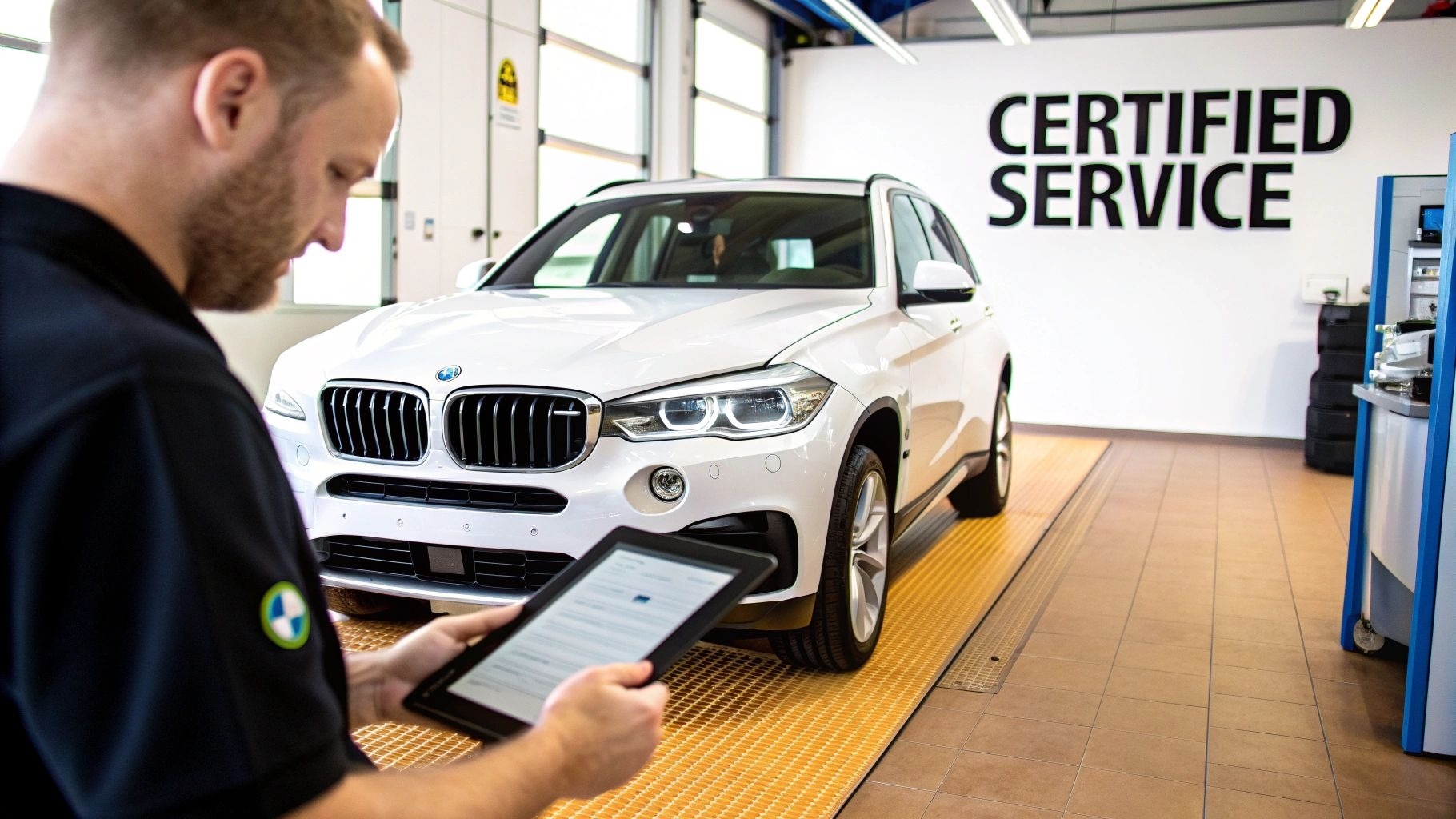
The thrill of driving a BMW X5 comes from its incredible performance, luxurious comfort, and sophisticated engineering. But that same precision engineering is exactly why ownership costs are higher than average. You're not just buying a vehicle; you're making a long term investment in a finely tuned machine that needs a dedicated budget for its upkeep. Knowing these costs from the get go helps you set the right expectations. While the first few years might feel pretty manageable, the expenses tend to creep up as the vehicle ages and parts start to wear. It’s a classic pattern for high performance German cars.
A Look at the Numbers
The financial commitment really comes into focus when you break it down. A detailed look at the numbers shows that the cost to maintain an X5 over its first decade is nothing to sneeze at.
"The cost to maintain a BMW X5 during the first 10 years of service is estimated at $19,460. This is more than the industry average for luxury SUV models by $7,007."
That $7,007 gap between the X5 and its peers is precisely why a maintenance budget is non negotiable. You're not just paying for oil changes; you're preserving the complex systems that make it the Ultimate Driving Machine.
How Costs Grow Over Time
The financial outlay isn't a flat line, it's a curve that gets steeper. In the first year, you might spend a reasonable $792. Fast forward to year five, and that annual figure can jump to $1,779. The chance of needing a major repair also climbs dramatically, from just over 5% in the first year to more than 56% by year ten. This escalation is mostly tied to major service intervals and the inevitable replacement of wear and tear items like brakes, tires, and suspension components. We’ll dive into the specific services later, but for now, the key takeaway is understanding this financial trajectory. You can see a complete 10-year cost breakdown at CarEdge to learn more.
What to Expect in Your First Five Years
The first five years with a new BMW X5 feel like the honeymoon period, but don't be fooled. This is when you lay the groundwork for the vehicle's long term health, and your future budget. It's a journey that starts with simple check ups but quickly moves toward more significant services, especially as that factory warranty starts to fade. When you first drive off the lot, your maintenance costs will be refreshingly low. The first year or two are all about the basics: oil changes and thorough vehicle inspections. Think of these as your X5’s annual physicals. They keep everything running smoothly and, more importantly, catch small issues before they snowball. This is key to keeping the BMW X5 maintenance cost manageable right from the start. But as you start putting real miles on the odometer, the service demands naturally get more intensive. Your X5's brain, the Condition Based Service (CBS) system, will start flagging specific components that need attention, and this is where the bills start to grow.
The Costs Don't Stay Low Forever
That initial, gentle slope of ownership costs gets noticeably steeper within this five year window. It’s a common story: an owner is cruising along, and then suddenly gets hit with a surprisingly large service bill around year three or four. The numbers back this up. Industry data shows the total maintenance bill for a BMW X5 over its first five years lands somewhere between $6,116 and $6,144. That’s over $600 more than the average for other luxury SUVs. This isn't just bad luck; it’s baked into a schedule of more complex, labor intensive services. Digging into the data, you find the chance of a major repair jumps from just 5.58% in year one to a very real 26.37% by year five. This is exactly why getting familiar with the service schedule is so crucial. Let's break down what that actually looks like.
Key Service Milestones on the Horizon
Maintaining your X5 is a whole lot more than just swapping out the oil. It’s a carefully choreographed sequence of services designed to keep all its advanced systems in peak condition.
- First 10,000 Miles (or 1 year): Your first real service stop. This will be for an engine oil and filter change, plus a multi point inspection to make sure everything settled in correctly. Expect this to run between $230 to $300.
- Around 30,000 Miles (or 2-3 years): Now things get a bit more involved. It's time for a brake fluid flush and a new cabin microfilter. These are critical for safety and keeping the air inside your cabin clean. This visit will likely cost you $460 to $625.
- By 60,000 Miles (or 4-5 years): This is the big one. As you approach this milestone, your X5 needs more serious attention. We're talking about replacing the engine air filter, all the spark plugs, and maybe even servicing the transmission fluid. A single visit for this level of work can range from $1,225 to $1,580.
The 60,000 mile service is a real eye opener for a lot of owners. It’s the moment you truly see the value of proactive maintenance. Taking care of these items on schedule is what prevents a manageable service bill from turning into a massive, unexpected repair down the road.
This timeline makes it clear: budgeting for your BMW X5 maintenance cost is a long game. When you know what's coming, you can plan for it. Think of these costs not as an expense, but as an investment in preserving the very engineering and performance you wanted in the first place.
Common BMW X5 Repairs and Their Costs
Beyond your scheduled maintenance visits, every car has its own personality quirks and common issues that tend to show up over time. For the BMW X5, a few well known repairs often surface as the odometer climbs. Knowing what to look for, and what it might cost, can save you a world of hurt later on. Think of it this way: routine service is like your planned health check ups. These common repairs are more like dealing with a sudden sports injury. You don't see them coming, but addressing them quickly is key to staying in the game. The true BMW X5 maintenance cost includes being ready for the unexpected.
The Notorious Valve Cover Gasket Leak
Ask any seasoned X5 owner or technician about common issues, and the valve cover gasket leak will almost certainly come up. This simple rubber gasket seals the top of the engine, but years of intense heat make it brittle. Eventually, it cracks and lets oil seep out. The classic tell tale sign is a distinct burning oil smell wafting through your vents, especially once the engine is hot. You might also spot a little smoke from the engine bay or find fresh oil spots on your garage floor. If you ignore it, you risk low oil levels, engine misfires (if oil gets on the spark plugs), and damage to other parts. Repairing this means replacing the old gasket and any related seals. While the parts are relatively cheap, the labor is where the cost lies. You can expect this job to run anywhere from $600 to $1,200, depending on your specific engine and local shop rates.
Cooling System Weaknesses
Keeping a performance engine like the X5's from overheating is a demanding job. Unfortunately, its cooling system has a few known weak spots, especially the water pump and thermostat. These parts are constantly working, and their plastic components can degrade and fail after thousands of heat cycles. Here are the symptoms you absolutely cannot ignore:
- An engine overheating warning light on your dashboard.
- Puddles of a sweet smelling, brightly colored liquid (coolant) under the front of your X5.
- Steam or smoke billowing from under the hood.
A cooling system failure is a red alert situation. Driving an overheating engine for even a minute can cause catastrophic damage like a warped cylinder head, a repair that easily runs into the thousands. Many owners proactively replace the water pump and thermostat around the 60,000 to 80,000 mile mark to avoid getting stranded. If you wait until one fails, the repair will likely cost between $800 and $1,500.
Suspension and Control Arm Wear
The BMW X5 is a heavy vehicle, yet it handles like a much smaller, sportier car. That incredible road feel is thanks to a sophisticated suspension system, but its components, especially the control arms and their bushings, take a serious beating over the miles. You'll know they're wearing out when you hear a clunking noise over bumps, feel a shimmy in the steering wheel at highway speeds, or see your tires wearing down unevenly. These are classic signs of worn out control arm bushings. Driving with shot suspension parts doesn't just ruin the ride; it compromises your handling and safety. Replacing the front control arms is a job that should always be done in pairs to keep the handling balanced. This repair, which includes parts, labor, and a crucial wheel alignment, typically costs between $1,000 and $2,000. To give you a clearer picture, here’s a quick reference table summarizing these potential repair costs.
| Estimated Costs for Common BMW X5 Repairs | ||
|---|---|---|
| Common Repair Issue | Typical Symptoms | Estimated Repair Cost Range |
| Valve Cover Gasket Leak | Burning oil smell, smoke from engine, oil drips | $600 – $1,200 |
| Water Pump & Thermostat Failure | Engine overheating, coolant leaks, steam from hood | $800 – $1,500 |
| Worn Control Arms & Bushings | Clunking noises, vibrating steering wheel, uneven tire wear | $1,000 – $2,000 |
Knowing about these potential issues ahead of time helps you budget properly and ensures you can keep your X5 performing at its best for years to come.
How Model Year and Trim Affect Your Maintenance
When you're trying to nail down the maintenance cost for a BMW X5, it's a huge mistake to think there's a single, simple answer. The truth is, the specific model year you choose and the trim level sitting in your driveway are two of the biggest factors that will shape your long term ownership bills. Think of it this way: a base model from a solid, reliable year is like your trusty daily driver, predictable and steady. A high performance X5 M from a generation known for a few quirks, on the other hand, is a thoroughbred racehorse. It's an absolute thrill, but it demands a much higher level of expensive, specialized care. As technology marches forward, so do the engineering and common issues tied to each X5 generation. An older E53 model (from 2000-2006) might have you budgeting for cooling system failures, a well known weak point of that era. A modern G05 (2019 and newer), however, has entirely different service needs, packed with complex electronics that require sophisticated diagnostics.
The Sprinter Versus the Marathon Runner
To really get a feel for the cost difference across the lineup, let's put the standard X5 head to head with its high octane sibling, the X5 M. Your standard gasoline powered X5 is built for the long haul, a marathon runner designed for endurance and balanced performance. Its maintenance schedule is pretty steady and predictable. The X5 M, however, is a sprinter. It’s engineered from the ground up for explosive power and track level handling. This level of performance comes at a cost that goes far beyond the initial sticker price. The massive brakes required to stop its immense power wear out faster and are significantly more expensive to replace. Its performance tires offer incredible grip but have a much shorter lifespan, meaning more frequent and costly trips to the tire shop. Every single component in the X5 M is pushed to its absolute limit. This leads to more frequent fluid changes and a much higher likelihood of needing expensive, M specific parts. It's why a Kelley Blue Book five year projection for an X5 M can easily include over $5,400 in maintenance and repairs alone.
How New Technology Changes the Game
Modern X5s, especially the mild hybrid and plug in hybrid (PHEV) models, throw a whole new set of variables into the maintenance cost equation. The addition of electric motors and battery packs changes just about everything. On one hand, these systems can definitely save you money.
- Regenerative Braking: This clever tech uses the electric motor to slow the vehicle, which dramatically reduces wear on your traditional brake pads and rotors. This can stretch the life of your brakes, saving you cash on one of the more common replacement jobs.
- Engine Assist: The electric motor pitches in to take some of the strain off the gasoline engine. Over time, that can lead to less wear and tear on internal components.
On the other hand, you're adding another layer of incredibly complex technology. While generally reliable, the high voltage battery systems and electric drivetrain components are eye wateringly expensive to repair or replace if something goes wrong out of warranty.
Historically, the BMW X5 has consistently ranked near the bottom for ownership costs in its class, with 10 year totals soaring over $7,000 above the luxury SUV benchmark. While modern mild hybrid systems can cut fuel system maintenance by 23% and regenerative braking can reduce brake costs by 15%, the overall cost of ownership remains high.
The data shows a clear trend of high expenses across generations, with even recent models having a 42.19% chance of a major repair by their eighth year. You can explore a deeper dive into how different generations and models stack up and learn more about their specific repair costs. Choosing your specific X5 carefully is the very first step in managing your future maintenance budget.
Smart Strategies to Lower Your Ownership Costs
Knowing the potential costs of owning a BMW X5 is one thing. Actually managing them is another game entirely. The good news is, you have more control than you think. With a proactive approach, you can turn a potentially stressful financial unknown into a predictable, manageable part of owning the SUV you love. This isn't about cutting corners or using cheap, questionable parts. That's a recipe for disaster. It's about being a smart, informed owner who combines preventative care with savvy decisions about service. Done right, you’ll keep your X5 running like a top and keep more money in your wallet.
The Power of Proactive Maintenance
The single best way to dodge a massive repair bill is to catch a small problem before it spirals into a catastrophic failure. Think of it like a tiny leak in your roof. You can patch it for a few bucks now, or wait until your ceiling collapses and you're staring at a five figure renovation. Your X5 is no different. Sticking to BMW's recommended service schedule is your first line of defense. Those regular oil changes, fluid flushes, and filter replacements aren't just suggestions; they are the lifeblood of your engine and transmission. Adhering to this schedule prevents the kind of premature wear and tear that leads directly to those eye watering, four figure repair bills.
Your Driving Habits Make a Huge Difference
How you treat your X5 on a daily basis has a direct, measurable impact on how fast its components wear out. Lead footing it from every stoplight and braking hard at the last second is a surefire way to burn through some of the vehicle's most expensive parts.
- Brakes: Constant, hard braking generates a ton of heat, absolutely cooking your pads and rotors. Driving smoothly and anticipating stops can dramatically extend their life.
- Tires: Aggressive cornering, jackrabbit starts, and slamming on the brakes literally scrubs the rubber off your tires. A smoother style means you'll get every last mile out of that expensive set.
- Suspension: Do your best to avoid potholes and take it easy over rough patches of road. This reduces the stress on your shocks, struts, and bushings, pushing back the timeline on costly suspension work.
Simply being more mindful behind the wheel can save you hundreds, if not thousands, over the years by delaying the replacement of these key wear and tear items.
Choosing Your Service Provider Wisely
Once your factory warranty is up, your service options open up, and this decision is critical for managing your budget. While a dealership offers unparalleled factory knowledge, a trusted independent specialist can often deliver high quality work at a more competitive price. Many owners find a happy medium with certified specialists who live and breathe BMWs. These shops often use genuine parts and employ experienced, factory trained technicians but have lower overhead than a massive dealership. The key is to do your homework. Look for shops with a long history of positive reviews and certified techs.
"I have been going to this shop for almost 20 years. They are extremely knowledgeable with the BMW brand and can troubleshoot any issue. They also provide reasonable prices and are very honest with the work that is needed on your car." - A real customer review found online
That kind of trust is built on years of honesty and real expertise, two invaluable assets when you're managing your BMW X5 maintenance cost. Finally, don't dismiss an extended warranty, but make sure you read every last word of the fine print. The right plan can be a lifesaver, covering a sudden transmission failure or an expensive electronic module. But you need to know exactly what’s covered, what your deductible is, and if you're limited on where the work can be done. A well chosen warranty buys you peace of mind and a predictable budget for those scary, unexpected repairs.
Why Certified Service Is an Investment in Your BMW
Your BMW X5 is more than just an SUV. It's a complex machine built with precision German engineering, where every single component is designed to work in perfect harmony. When it’s time for service, that level of engineering demands an equally high level of care. Choosing a BMW certified service center isn't just another line item to add to the BMW X5 maintenance cost. Think of it as a direct investment in your vehicle’s performance, its safety, and its long term value. Honestly, it’s the most effective way to protect the machine you love.
The Tools and Training Make a Real Difference
Independent shops can be great, but a certified center has a distinct, undeniable advantage. We have exclusive access to BMW's proprietary diagnostic tools and software. These aren't generic scanners; these systems communicate directly with your X5's onboard computers, flagging potential issues with an accuracy that off the shelf equipment simply can't touch. On top of that, our technicians go through continuous, factory backed training that's specific to BMW models like the X5. They know the common quirks, the service bulletins, and the exact procedures for your vehicle inside and out. This specialized knowledge is absolutely critical for diagnosing complex electronic gremlins or performing intricate repairs correctly the first time.
One BMW owner on a popular forum shared their experience after trying an independent shop for a persistent warning light: "They replaced three different parts guessing at the problem. I finally took it to a certified center, and they found a software issue in 15 minutes. The specific training makes all the difference."
The Importance of Genuine BMW Parts
Another massive benefit of certified service is the exclusive use of Original Equipment Manufacturer (OEM) parts. These components are identical to the ones your X5 rolled off the assembly line with. This guarantees a perfect fit and ensures that every part performs exactly as BMW’s engineers intended.
- Perfect Fit and Function: Aftermarket parts are often designed with a one size fits most approach. That can lead to small vibrations, premature wear, or even system failures down the road.
- Warranty Protection: Using genuine parts from a certified provider is key to maintaining your vehicle’s factory warranty, protecting you from potentially huge repair bills.
- Preserving Resale Value: A well documented service history using only genuine BMW parts is a huge selling point. It shows a potential buyer that the vehicle was maintained to the highest possible standard, helping you command a better price when it's time to sell.
Choosing certified service means choosing confidence. It gives you the peace of mind that your investment is being cared for by experts with the right tools, the right training, and the right parts. When you’re ready to experience that commitment to quality, we invite you to book your next service at Habberstad BMW of Bay Shore.
Answering Your Top Questions
When you're thinking about bringing home a BMW X5, a few questions about long term ownership are bound to come up. It's smart to think ahead. Let's tackle some of the most common questions we hear from drivers right here in Bay Shore.
Is the BMW X5 Expensive to Maintain?
Let's be direct: compared to a non luxury SUV, yes, the BMW X5 will have higher maintenance costs. It's a premium, high performance machine, and keeping it that way requires a different level of care. There are a few good reasons for this:
- Precision Parts: The components in your X5 aren't generic. They're genuine BMW parts, engineered for a specific level of performance and durability, which naturally come at a premium.
- Expert Labor: These aren't simple cars. Our technicians need specialized training and sophisticated diagnostic tools to work on them correctly, and that expertise is reflected in the labor cost.
- Complex Technology: From the iDrive system to the advanced drivetrain controls, the X5 is packed with technology. Servicing these intricate systems requires a depth of knowledge you won't find at a general repair shop.
What's the Most Expensive Maintenance on a BMW?
While a catastrophic engine or transmission issue is the nightmare scenario for any car owner, a more common and still very significant expense often comes from the X5's advanced electronics. If a major control module, like the brain of the engine (ECU) or the central iDrive unit, fails, the cost to diagnose, replace, and reprogram it can easily climb into the thousands.
"A few years ago, my X5's transfer case actuator failed. It was a known issue with my model year. The repair at the dealer was quoted at over $4,000 because of the labor and the cost of the part itself. Definitely not a cheap fix." - An owner's experience shared on an online forum.
How Many Miles Can a BMW X5 Last?
This is where your commitment as an owner really shines. With consistent, proactive maintenance, seeing an X5 reach 150,000 to 200,000 miles, or even more, is absolutely achievable. The secret isn't just following the recommended service schedule, but getting ahead of it. Taking care of small oil leaks before they become big ones and replacing wear and tear parts like cooling system components before they fail is what separates a short lived X5 from a long term road warrior. Ultimately, an X5 will last as long as you care for it. Sticking with a certified service center that uses genuine parts is the single best insurance policy for ensuring your vehicle remains a pleasure to drive for years and years.
Protecting your investment means bringing it to the people who know it inside and out. At Habberstad BMW of Bay Shore, our certified team uses the right parts and factory approved procedures to keep your X5 performing the way it was designed to. Schedule your next service with us today and feel the confidence that comes with true expert care.