What to Look for When Buying a Car: A Complete Guide
January 15 2026 - dave@phatoon.com
What to Look for When Buying a Car: A Complete Guide
Knowing what to look for when you're buying a car really just boils down to three things: nailing down your budget, getting honest about your needs versus your wants, and understanding the real-world trade-offs between new and used. If you can get these fundamentals locked in before you even think about shopping, you've already won half the battle. It's the best way to make sure you end up with a car you love, without the stress and regret.Your Essential Car Buying Starting Point
Let's be honest, buying a car can feel like a massive, overwhelming task. But a little bit of planning can turn that chore into a totally manageable project. The secret is doing your homework before you ever set foot on a dealership lot. This upfront work saves you a ton of time, keeps you from making an emotional impulse buy, and helps you stay laser-focused on what actually matters for your life and your wallet. This guide is your practical roadmap, starting with the absolute essentials. Think of it as your pre-shopping checklist to make sure you start with total clarity.Define Your Priorities First
Before you start getting distracted by shiny paint and cool features, you have to establish your baseline. This first phase is all about self-assessment and practical planning. It’s the difference between wandering aimlessly through a car lot and walking in with a specific, actionable list. The single biggest mistake I see people make is skipping this step entirely. They jump right into searching for specific cars without first figuring out what a "good" car even means for them. Remember, getting a great deal on the wrong car is still a bad purchase.A car-loving friend of mine, David Katz, once told me about a buddy who bought a stunning classic car without even sitting in it first. He got it home, only to realize it was physically painful for him to drive. His advice was simple but brilliant: "one should first sit in a car before buying it to see how you fit."That wisdom applies to every single car purchase. The vehicle has to fit your real-world needs. To help you stay on track right from the beginning, here’s a quick guide to the most critical factors you need to figure out.
Quick Guide to Car Buying Priorities
This table is your cheat sheet. It summarizes the most critical factors to evaluate as you start your car search, helping you stay organized and focused on what truly counts.| Priority Area | Key Considerations |
|---|---|
| Budget | What's your absolute maximum monthly payment? Have you factored in insurance, fuel, and maintenance costs? |
| Needs vs. Wants | How many seats do you genuinely need every day? Is all-wheel drive an absolute must-have, or just nice to have? |
| Primary Use | Will this be a daily commuter grinding out miles, a family hauler for road trips, or just a fun weekend car? |
| Long-Term Plan | How long do you see yourself owning this car? Is resale value a big deal for you down the road? |
New vs Used Cars: Which Path Is Right for You?
The first big fork in the road for any car buyer is deciding between new and used. It's a classic debate, and the right answer really boils down to your personal priorities, budget, and how you feel about a car's history. A new car has an undeniable appeal. You get that perfect "new car smell," the very latest safety features and technology, and the complete peace of mind that comes with a full factory warranty. There are no questions about its past because you're writing the first chapter. It's the simplest, most straightforward path to ownership. However, the smart financial move often points toward a used vehicle. The biggest advantage here is sidestepping the steepest drop in value a car ever experiences, known as depreciation. A brand-new car can lose 20% or more of its value in the first year alone. By buying a car that's even a few years old, you're letting the first owner absorb that massive initial hit for you. To help map out your thought process, this flowchart breaks down the key steps, from setting a budget to making that crucial new-versus-used call.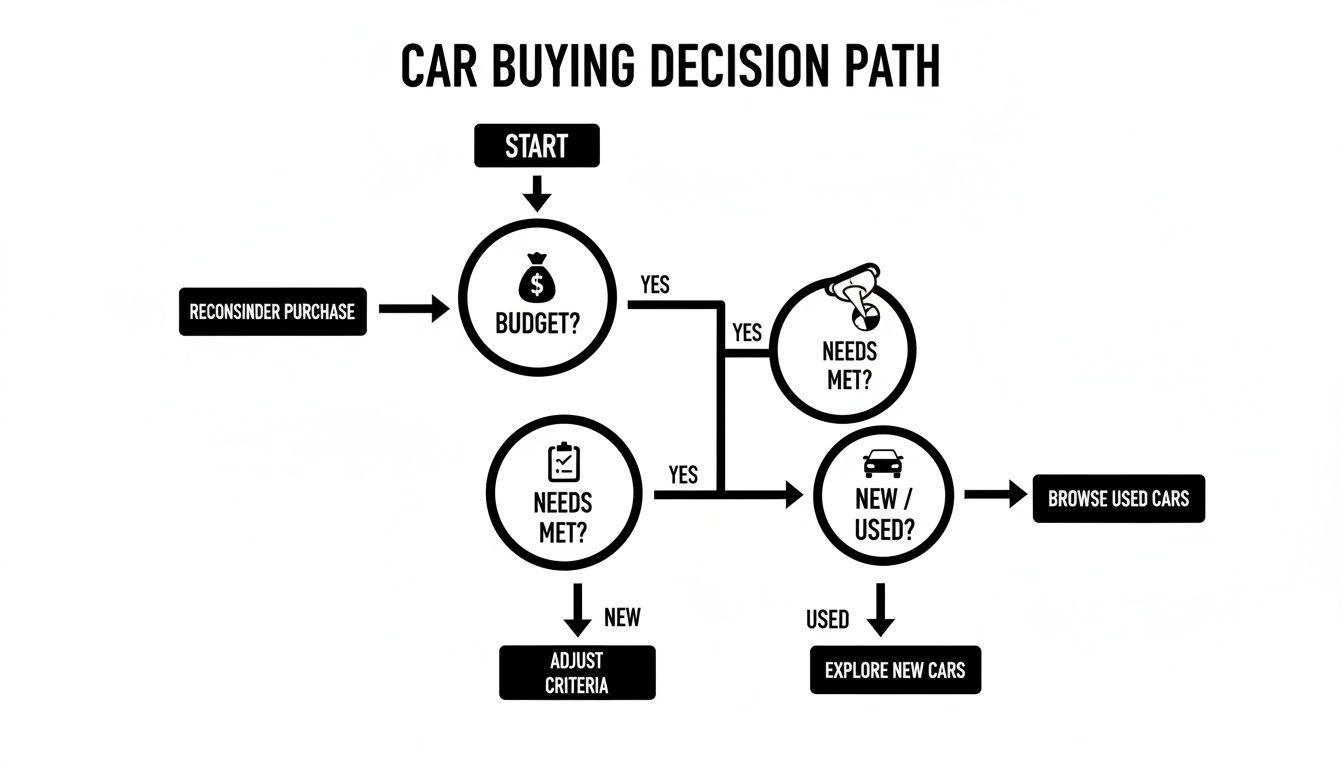 As you can see, once you've figured out your budget and what you need the car to do, this choice is the next critical step in narrowing down your options.
Finding the Best of Both Worlds with CPO
For many buyers, the ideal solution isn't on either extreme but sits right in the middle: a Certified Pre-Owned (CPO) vehicle. CPO programs blend new-car confidence with used-car value, making them an incredibly popular choice for savvy shoppers and families who want a little extra security. Think of it as a pre-screened, high-quality used car that comes with a manufacturer's blessing. To see how these options stack up, let's break them down side-by-side.New vs Used vs Certified Pre-Owned (CPO) Comparison
| Feature | New Car | Used Car | Certified Pre-Owned |
|---|---|---|---|
| Price | Highest | Lowest | Mid-range (higher than used) |
| Depreciation | Highest (20%+ in first year) | Slowest (initial drop already happened) | Slower than new |
| Warranty | Full factory warranty | Often none, "as-is" sale | Manufacturer-backed extended warranty |
| Condition | Perfect, brand-new | Varies widely, unknown history | Excellent, passes rigorous inspection |
| Technology | Latest features and safety tech | Potentially outdated | Modern, but not brand-new |
| Peace of Mind | Highest | Lowest | High, similar to new |
- Rigorous Inspection: These aren't just quick once-overs. CPO cars undergo a multi-point inspection that covers everything from engine health to the pixels on the infotainment screen.
- Extended Warranty: You get warranty coverage that goes beyond the original factory terms, protecting you from surprise repair bills down the road.
- Slower Depreciation: You still get to enjoy a lower price tag and avoid that huge initial drop in value that new car buyers face.
The Non-Negotiable Mechanical Inspection
A fresh coat of wax and a gleaming interior can make any car look like a great deal. But they can also be a clever disguise, hiding a world of expensive mechanical nightmares. This is why a thorough mechanical inspection is the single most important step in your car-buying journey, especially if you’re looking at a used vehicle. It's your best and sometimes only defense against buying someone else's headache. You don't have to be a master mechanic to give a car a solid once-over. Think of it as a first-pass screening to catch the obvious red flags before you get emotionally invested or spend a dime. This quick walkthrough can save you from falling for a car that only looks good on the surface.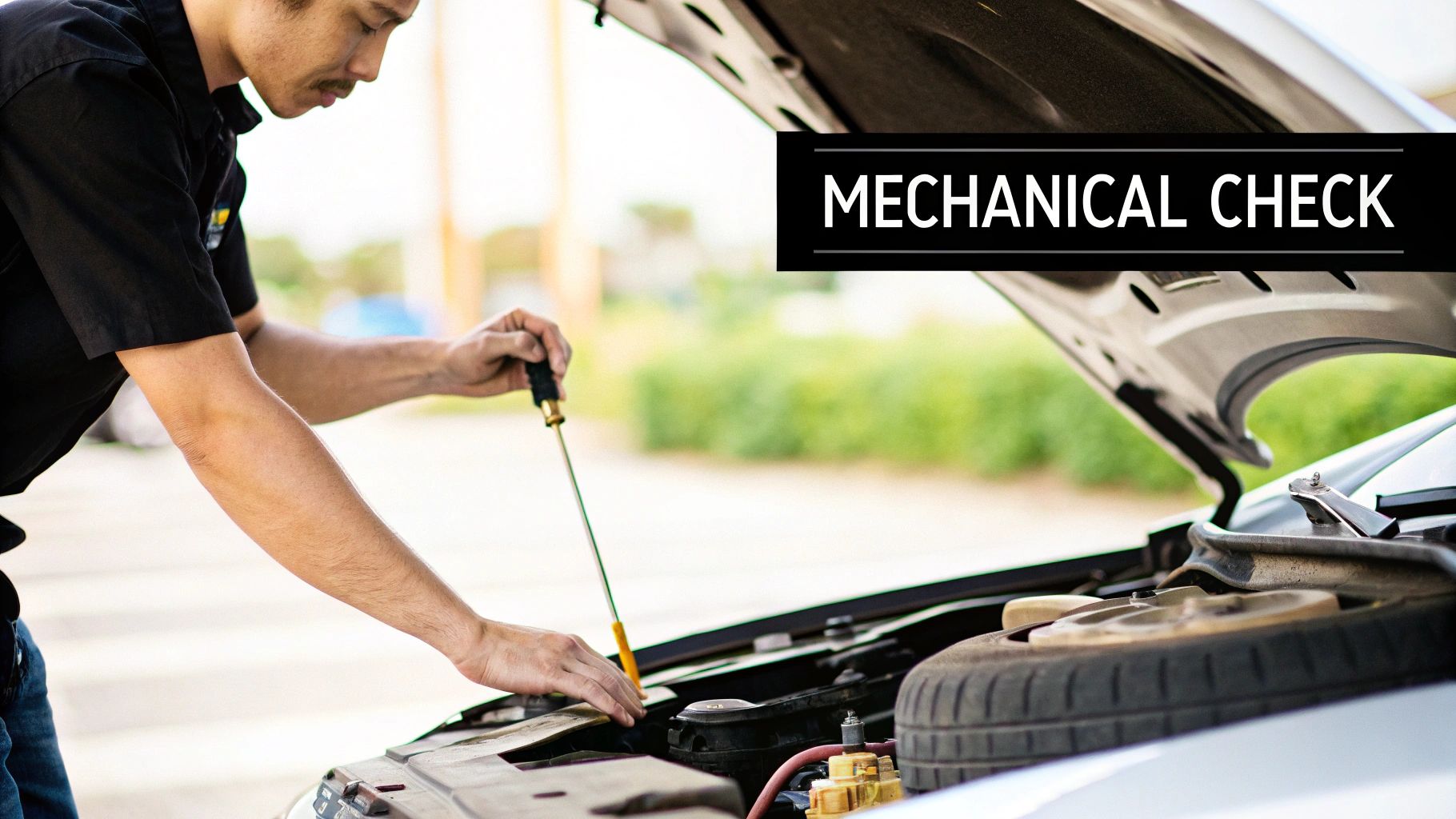
Your Personal Inspection Checklist
Start with a simple visual tour. You don’t need any special tools, just a critical eye and the flashlight on your phone. You’re looking for things that just don't seem right.- Under the Hood: Pop the hood and look for obvious fluid leaks on the engine or dripping onto the ground below. Pull the engine oil dipstick. The oil should look like honey or translucent brown, not black, gritty, or milky white. Also, scan the belts and hoses for any visible cracks or fraying.
- Tires and Brakes: Take a look at the tires. Is the tread worn down evenly on all four? If one side is more worn than the other, it could signal alignment problems, which might point to bigger suspension issues or even frame damage from an old accident. Peek through the wheels at the brake rotors; if you see deep grooves or heavy rust, a brake job is in your near future.
- Body and Frame: Walk around the car and check the gaps between the body panels, like between the hood and the front fenders. Are they even and consistent? If not, it’s a classic sign of a shoddy accident repair. Don’t forget to check for rust, especially under the car, around the wheel wells, and at the bottom of the doors.
- Lights and Electronics: This is the easy part. Hop in and test everything. Flick on all the lights (headlights, high beams, turn signals), play with the radio, run the power windows up and down, and crank the air conditioning to make sure it blows cold.
When to Call in a Professional
If a car passes your initial sniff test but you still want a second opinion, or you just want absolute peace of mind, it's time to get a pre-purchase inspection (PPI). This is a small investment that can literally save you thousands of dollars in surprise repairs down the road. You’ll take the car to a trusted independent mechanic who will put it up on a lift and give you an unbiased, detailed report on its true condition.A PPI is your safety net. Any reputable seller or dealership will have no problem with you getting one. If they push back or make excuses, consider it a giant red flag and walk away.For certain vehicles, especially from premium brands, a specialist’s eye is invaluable. The factory-trained technicians at a brand-specific dealership, like our team here at Habberstad BMW, are uniquely equipped to spot model-specific issues that a general mechanic might easily miss. They work on these exact cars day in and day out, so they know all the common quirks and potential problem areas. It’s that next level of expertise that gives you complete confidence that no stone has been left unturned. Of course. Here is the rewritten section, crafted to sound completely human-written and natural, following all the provided guidelines and examples.
Looking Beyond the Sticker Price at Total Ownership Costs
The price you negotiate for a car is just the first chapter of its financial story. A great deal on the window sticker can quickly turn sour if the vehicle costs a fortune to run, maintain, and insure. The real number you need to focus on is the total cost of ownership. This is every single dollar you’ll spend from the day you buy it to the day you sell it. Getting this right is the difference between a smart purchase and a financial drain that bleeds you dry month after month. When you learn to look past that initial price tag, you can pick a car that not only fits your budget today but stays affordable for years to come.Deconstructing Long-Term Car Expenses
For most drivers, the biggest ongoing hit to the wallet is fuel. A car with poor gas mileage is like a subscription service with a high monthly fee you can never cancel. You might be looking at two cars with similar purchase prices, but if one gets 20 miles per gallon and the other gets 35, that difference will cost you thousands of dollars over the life of the car. It’s a relentless expense. Next up is insurance. Premiums can vary wildly from one model to another. A sporty two-door coupe will almost always cost more to insure than a sensible family sedan, even if they cost the same upfront. Insurance companies look at everything. They consider the car's safety ratings, how much parts cost, and even how often that model gets stolen to set your rate.One driver on Reddit put it perfectly: "I sold my sports car for a minivan after my first kid was born. My insurance premium dropped by almost 40%. It was a real eye-opener about how much the specific model matters."Finally, you have to budget for maintenance and repairs. Some brands are legendary for their reliability, while others have a reputation for expensive and frequent trips to the shop. Before you get serious about a car, you absolutely have to research common problems for that specific model and year. This is a crucial step in predicting those future costs and avoiding a lemon.
Calculating the True Cost Per Mile
Thinking in terms of "cost per mile" is a powerful way to see the big picture. An inefficient SUV might cost you $0.15 to $0.20 per mile in gas alone. A frugal hybrid, on the other hand, could be as low as $0.08. It sounds like pennies, right? But over 150,000 miles of driving, that small difference adds up to a staggering $10,500 or more in your pocket. This is exactly why fuel efficiency has become such a critical factor when people are figuring out what to look for when buying a car, a trend we're seeing in markets all over the world. As buyers prioritize long-term savings, you can see the shift reflected in global automotive sales data. People are getting smarter and looking at the whole financial story, not just the first page.Understanding Modern Safety Features That Matter
If you're like most people, especially if you have a family, a car's safety performance is a non-negotiable priority. These days, safety goes way beyond just airbags and seatbelts. The real game-changer is the suite of technologies known as Advanced Driver-Assistance Systems (ADAS), which basically act like a digital co-pilot to help prevent an accident from ever happening. It’s crucial to understand what these features actually do when you’re looking at cars. They aren't just fancy gadgets to jack up the price. They are proven lifesavers that actively monitor your surroundings. Think of them as an extra set of eyes on the road, always on, always working to protect you and your passengers from the unexpected.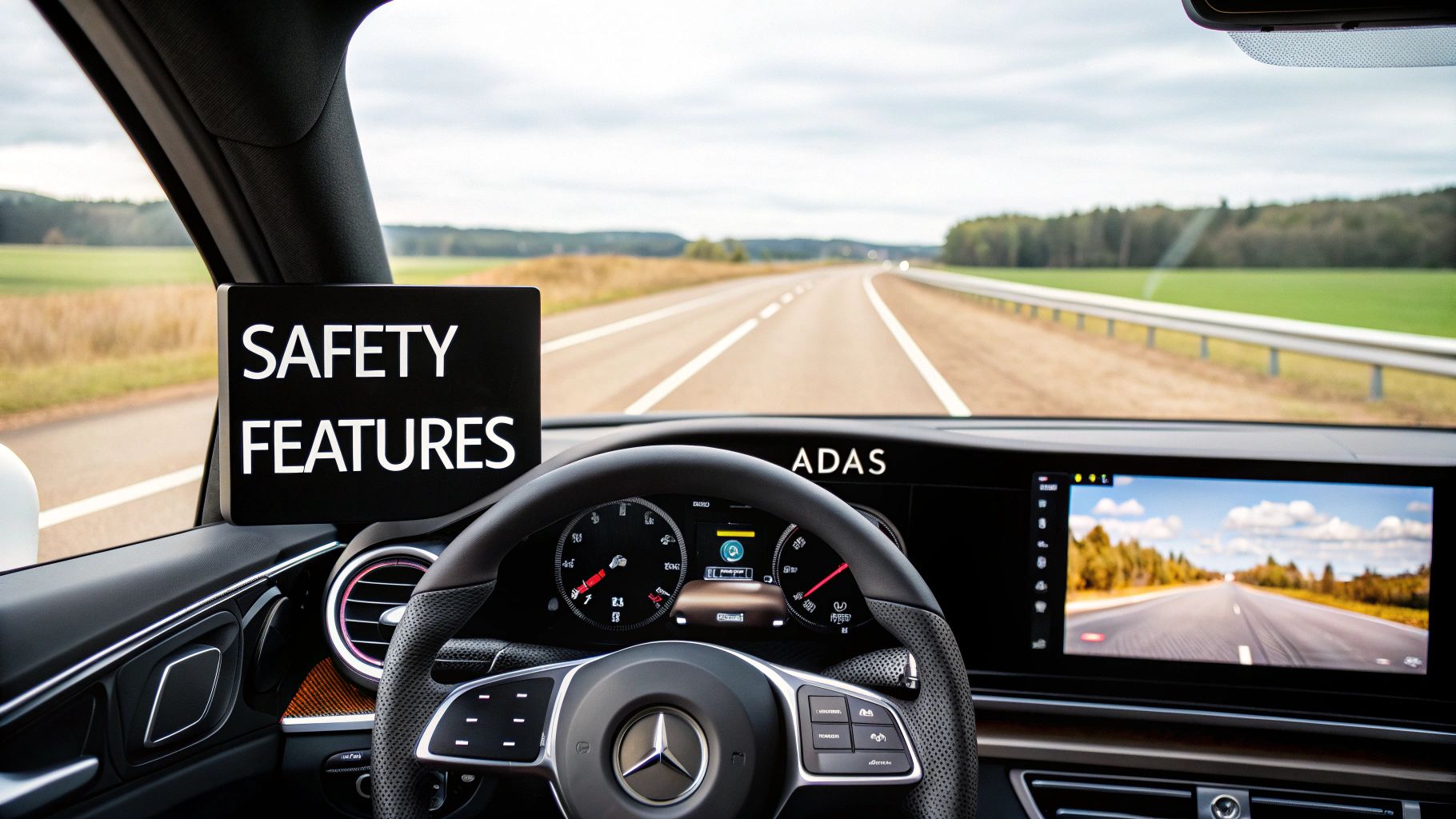
Key ADAS Features to Prioritize
When you glance at a window sticker, the list of safety features can look like a confusing alphabet soup of acronyms. To cut through the noise, here are the most impactful technologies you should actively look for.- Automatic Emergency Braking (AEB): This system uses radar or cameras to watch for a potential forward collision. If you don't hit the brakes in time, the car will do it for you to either avoid the crash entirely or make it much less severe.
- Blind-Spot Monitoring (BSM): Ever started to change lanes and had someone lay on the horn? This feature prevents that. Little lights in your side mirrors will light up to warn you when a vehicle is hiding in your blind spot.
- Lane-Keeping Assist (LKA): On a long highway drive, it’s easy to drift a little. If this system senses you're straying from your lane without signaling, it can gently nudge the steering to guide the car back into place.
According to one happy owner on an Edmunds forum: "I had a car pull out in front of me with no warning. Before I could even slam on the brakes, my car's AEB system had already kicked in and stopped me. I'm a total believer now."
How to Decode Official Safety Ratings
Beyond the individual tech features, you need to look at how the car itself holds up in a crash. The two big names you need to know are the National Highway Traffic Safety Administration (NHTSA) and the Insurance Institute for Highway Safety (IIHS). NHTSA uses a straightforward 5-Star Safety Ratings system. The more stars a car earns, the better it protected its occupants in frontal, side, and rollover crash tests. It's simple and effective. The IIHS, on the other hand, is known for being even tougher. They conduct more demanding tests and give ratings of "Good," "Acceptable," "Marginal," or "Poor." For a vehicle to earn their highest honor, the "Top Safety Pick+" award, it has to ace all the crash tests and come standard with high-quality ADAS features. These ratings are the hard proof of a car's ability to protect you when things go wrong. And the data doesn't lie. Modern safety systems are incredibly effective. Studies show that vehicles with automatic emergency braking can slash rear-end crashes by 50%, while cars without forward collision warnings have 40% higher severe crash rates. It’s no wonder these features are becoming standard, especially on premium models where safety is a core part of the brand. You can learn even more about these trends by checking out global automotive insights.Making the Most of Your Test Drive and Negotiation
The spec sheet and online reviews will only get you so far. The real story begins the moment you slide behind the wheel. The test drive is your single best opportunity to see how a car really feels, and it's a step you absolutely cannot rush or skip. This is where you find out if the vehicle fits your life, not just your budget. Your mission is to recreate your daily grind. Don’t just take a quick, dealer-guided loop around the block. Insist on driving the car on the roads you use every day. Think stop-and-go city streets, bumpy backroads, and a good stretch of highway. This is what uncovers a car's true personality.What to Focus on During the Drive
Once you’re in the driver’s seat, kill the radio. Pay close attention to how the car sounds, feels, and responds. You're not just kicking the tires here. You're on a fact-finding mission that will make or break your final decision. Here are a few things to zero in on:- Acceleration and Braking: Does the car have enough guts to merge onto the highway with confidence? When you hit the brakes, are they smooth and responsive, or do they feel mushy, grabby, or make a squealing protest?
- Ride and Handling: How does it handle potholes and sharp turns? Is the steering tight and connected to the road, or does it feel loose and vague, leaving you guessing?
- Comfort and Noise: Settle in and listen. Are the seats actually comfortable enough for a long haul, or will they have your back aching in an hour? At highway speeds, are you yelling over excessive road, wind, or engine noise?
A commenter on a car blog stressed this point: "I test drove a car I loved online but hated on the highway. The road noise was so loud I couldn't even think straight. You can't learn that from a review."
Navigating the Negotiation Process
Alright, you’ve found "the one." Now it’s time to talk numbers. Negotiation doesn’t have to be a high-stress battle. When you walk in prepared, it can be a respectful, transparent process that leaves everyone feeling good about the deal. The absolute key to a good negotiation is doing your homework before you ever set foot in the dealership. Use online pricing guides to find out the car's fair market value. Even better, get pre-approved for financing from your own bank or credit union. When you walk in knowing exactly what the car is worth and what you can afford, you negotiate from a position of confidence, not desperation. This simple prep work is one of the most critical steps when figuring out what to look for when buying a car.Answering Your Final Questions Before You Buy
As you get closer to making a decision, a few last-minute questions always seem to pop up. It's completely normal. Getting clear, straightforward answers to these common queries can give you the final bit of confidence you need to sign on the dotted line and drive away happy.How Many Miles Is Too High for a Used Car?
This is one of the most common questions we hear, and the honest answer is: it depends. There’s no single magic number, because a car’s maintenance history is far more important than what the odometer says. A well-cared-for vehicle with 100,000 miles can easily be a better, more reliable choice than a neglected one with only 60,000 miles. As a general rule of thumb, most buyers feel comfortable with a used car under 100,000 miles. Once you get over 150,000 miles, you should expect that the vehicle will likely need more frequent attention and repairs, so a detailed service record becomes even more critical.What Is the Best Time of Year to Buy a Car?
If you have some flexibility, you can definitely time your purchase to find some excellent deals. Dealerships often have sales quotas to meet, which means you can find more flexibility toward the end of the month, quarter, or year. That’s when managers are most motivated to make a deal happen. Holiday sales events are also a great time to shop. Another key window is when new model years start arriving on the lot, which is typically in the late summer and fall. Dealers are always eager to clear out the "older" inventory to make space, which can lead to some great negotiating opportunities for you.Should I Get Financing Through the Dealership or My Bank?
This is a fantastic question, and the smartest strategy is to do both. Before you even step foot in a dealership, it’s a wise move to get a pre-approved loan offer from your own bank or a local credit union. Think of this pre-approval as your baseline. It's the rate you know you can get. With that number in your back pocket, you can then see what financing the dealership can offer. Sometimes, they have access to special manufacturer rates that your bank can't match. By comparing the two, you can confidently choose the option that saves you the most money over the life of the loan. Ultimately, buying a car that you can count on is one of the smartest financial decisions you can make. Frequent breakdowns can lead to thousands in unexpected repair bills, and unreliable cars can depreciate 20-30% faster in the first three years. If you're interested in the broader market, you can review recent automotive industry reports for more details.At Habberstad BMW of Bay Shore, we believe your car buying experience should be transparent, enjoyable, and tailored to you. Our team is here to answer every one of your questions and help you find the perfect new or Certified Pre-Owned BMW that fits your life and your budget. Explore our inventory online or visit us for a test drive today.